
Florian Lampersberger
Licensed Psychological Psychotherapist · Psychoanalyst (DGPT) · Lecturer, Academy of Psychoanalysis and Psychotherapy Munich
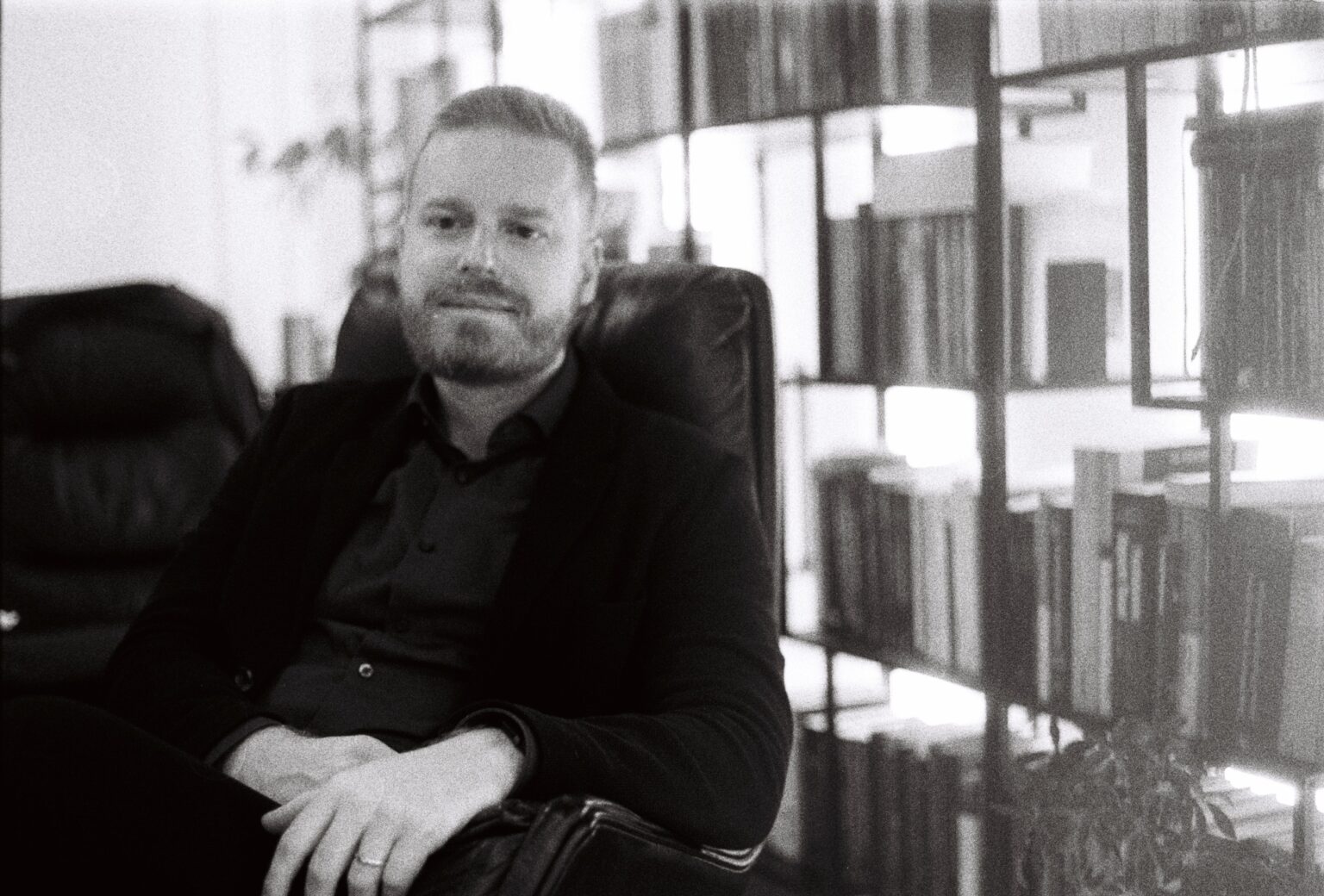
In private practice in Munich-Schwabing. I treat adults with psychoanalytic and psychodynamic psychotherapy — and work in teaching, research and health policy on the question of how psychoanalytic thinking remains effective today.
Stations
Psychology (B.Sc., M.A.)
International Psychoanalytic University Berlin — psychology with a psychoanalytic focus.
Philosophy (M.A.)
Munich School of Philosophy — philosophical anthropology, hermeneutics, questions of meaning and authenticity.
Psychotherapy & psychoanalysis
Clinical training at the Academy of Psychoanalysis and Psychotherapy Munich.
Lecturer & training committee
Lecturer at the Academy of Psychoanalysis and Psychotherapy Munich, member of its training and continuing education committee.
Health policy
Advocacy for preserving outpatient psychotherapeutic care in Germany — analyses on this website and on Couch & Agora.
How I work
I came to psychoanalysis through philosophy — more precisely, through the question of why we are so often strangers to ourselves. Both disciplines take the same observation seriously: that between what we know about ourselves and what actually moves us, there is a gap. Psychoanalysis is the attempt to work within that gap rather than paper over it. A considerable part of what we feel, want and repeat is not directly accessible – not by accident, but because it once had good reasons to become inaccessible – and it returns later: as a symptom, as a relationship pattern, as an exhaustion that the circumstances alone cannot explain.
In this understanding, symptoms are more than malfunctions to be removed: they are attempted solutions. The best answer a person could find to an inner conflict as long as no better one was available. Whoever removes only the symptom leaves behind the conflict it stood in for. Treatment, to me, therefore means understanding together what the symptom is a solution for — and, within the safety of a reliable therapeutic relationship, making a better one possible. A relationship in which old patterns are not merely talked about but experienced and changed as they occur; that is why analytic work takes time. Time for one’s own complexity: not a luxury — a standard of care.
What about CBT?
Psychotherapy is not a contest of schools, even if public debate occasionally suggests otherwise. Cognitive behavioural therapy is an effective, well-researched treatment and an excellent choice for many concerns; research shows equivalence between the established approaches, not superiority. The honest question to ask of any treatment is therefore not which method is best, but what is to be treated: a circumscribed symptom — or the person in whose life it is embedded. If you are looking for focused, goal-oriented change, CBT will often serve you very well. If you want to understand why something keeps repeating itself, especially after several previous attempts, psychoanalytic work offers the space for that.
How I think can be read on Couch & Agora, where I write — in German — about psychoanalysis, society and the future of psychotherapy.
For companies and individuals in development, I also offer psychodynamic coaching outside clinical treatment.
Coaching & Consulting →Visit Couch & Agora →